Boulevard Victor Hugo Nice: Elegant Parisian-Style Avenue

Victor Hugo Boulevard
Boulevard Victor Hugo is one of the most elegant avenues in Nice, running parallel to the Promenade des Anglais. Belle Époque facades, luxury hotels, palaces and a neo-Gothic temple: a surprising stroll from Rue Jean Médecin to Boulevard Gambetta.
The short answer: boulevard Victor Hugo runs from rue Jean Médecin (place Masséna) to boulevard Gambetta, parallel to the Promenade des Anglais. Walking its length takes about twenty minutes, without stops. The three must-sees are the Boscolo (No. 12, 1913 Belle Époque façade), the Temple Saint-Esprit (No. 21, 1887 Neo-Gothic, listed as a historic monument in 2020) and the Palais Meyerbeer (No. 45, listed since 1994).
It is also one of the best addresses for booking a hotel in Nice: central, lively by day, quiet at night, within walking distance of the beach, Old Nice and the shops of avenue Jean Médecin. Here is what the boulevard tells you, building by building.
Boulevard Victor Hugo at a glance
| Landmark | Number | What you see | Date / style | Protected |
|---|---|---|---|---|
| Boscolo Nice Hôtel & Spa | 12 | Belle Époque façade, rooftop pool, 112 rooms | 1913, Charles Dalmas; refurbished 2005-2008 | No |
| La Villa Nice Victor Hugo | 19 | Boutique hotel facing the boulevard | Early 20th century | No |
| Temple Saint-Esprit | 21 | Reformed church with a spire, Nordic Neo-Gothic style | 1887 | Listed in 2020 |
| Palais Meyerbeer | 45 | Prestigious apartment block, ornate balconies | Early 20th century | Listed in 1994 |
| La Malmaison Nice | 48 | Hotel in an Art Deco building (former Hôtel de Liège) | Art Deco | No |
| Victor Hugo Hôtel | 59 | Budget hotel in the very centre | 20th century | No |
| Square | Junction with Gambetta | Shaded square, playgrounds, labelled trees | Urban garden | No |
Numbers increase from west to east: the further you walk towards boulevard Gambetta, the further you are from the sea and place Masséna.
Where is boulevard Victor Hugo?
The boulevard starts at avenue Jean Médecin, a short walk from place Masséna, then climbs east to boulevard Gambetta in a gentle curve between the Musiciens quarter and the slopes of Cimiez. Its first section runs past the department stores, its second is residential.
It crosses rue de France and avenue de Verdé, two streets parallel to the Promenade, making the boulevard a natural shortcut between the shopping centre and the residential districts. Nice-Ville station is about 700 metres away, via rue de Rivoli.
Walking times: place Masséna in 5 minutes, the Promenade des Anglais in 10 minutes, Old Nice in 15 minutes, Nice-Ville station in 12 minutes. Full walking routes are in getting around Nice on foot.
The Boscolo Nice Hôtel & Spa (No. 12)
At No. 12, the Boscolo Nice Hôtel & Spa (formerly Boscolo Exedra, previously the Atlantic) is the first great building on the boulevard. Built in 1913 by architect Charles Dalmas for a Swiss hotelier, it gives the boulevard its most spectacular Belle Époque façade: columns, pediment and a rhythm of windows that recall winter Nice in the Belle Époque.
The property was completely refurbished between 2005 and 2008 and reopened at the end of 2008 with 112 rooms and suites. This 5-star palace has a rooftop pool with one of the best roof-terrace views in the city and a private beach eight minutes away on foot. It is the reference address for a high-end stay without leaving the centre.
The Temple Saint-Esprit (No. 21)
At No. 21, "Le Temple" is for many people the most surprising building on the boulevard. Built in 1887 for the American community of the Riviera and sold in 1974 to the Reformed Church of France, it adopts a Nordic Neo-Gothic style: a sharp spire, tracery and stained glass, entirely unexpected between Belle Époque façades and palm trees.
The Temple Saint-Esprit has been listed as a historic monument since 2020. It is an active place of worship: you admire it from the pavement, and its doors open mainly for services and the European Heritage Days. An unmissable photo stop halfway along.
The Palais Meyerbeer (No. 45)
At No. 45, the Palais Meyerbeer, listed since 1994, embodies the luxury residential architecture of the early 20th century: a continuous balcony, wrought-iron railings and pale dressed stone. It is regularly cited as one of the finest buildings in the city.
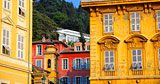
All along the boulevard, Niçoise apartment blocks, private mansions and palaces compete for bay windows, turrets and ceramics. Take the walk slowly: the boulevard is best read from the opposite pavement, where you can see whole façades at once.
The other hotels on the boulevard
Beyond the Boscolo, the boulevard offers addresses for almost every budget: La Villa Nice Victor Hugo (No. 19) for charm, La Malmaison (No. 48) in an Art Deco building that was the Hôtel de Liège, or the Victor Hugo Hôtel (No. 59) for a simple, central night.
The density of hotels comes from the geography: halfway between the sea, the station and the department stores, the boulevard suits shopping weekends as much as stays with children. Compare the addresses in our selection of hotels in Nice and in where to stay in Nice.
What to see nearby
To the west, the boulevard opens onto avenue Jean Médecin and its department stores, then onto place Masséna, where red statues dialogue with the tram lines. The baroque Palais Lascaris is a five-minute walk away via rue de France.
To the east, the walk continues towards the list of must-sees, then the Gratte-Ciel boulevards and the leafier boulevard de Cimiez, home to the Matisse museum and the Roman arenas. For culture, the Masséna museum is a few minutes' walk away at the western end of the boulevard.
In the evening, head back down rue de France towards the Promenade des Anglais: the boulevard-sea loop takes a relaxed half hour. See also our Nice weekend idea.
Getting to boulevard Victor Hugo
By tram: Masséna stop (line 1) or Opéra-Vieille Ville for the western end; Gambetta stop (lines 2 and 3) for the eastern end. Fares, cards and passes are detailed in our Lignes d'Azur tram and bus guide.
By car: parking is paid and often full on weekdays as well as at weekends; the most reliable option is to leave the car on the outskirts and arrive by tram. See our parking guide, and getting around Nice by car for city-centre constraints. If you are driving from far away, reaching Nice by car explains the motorway exits.
On foot from the station: allow 12 to 15 minutes via rue de Rivoli, the easiest route with luggage. Rail connections are covered in reaching Nice by train.
The square at the end of the boulevard
At the junction with boulevard Gambetta, a shaded square marks the end of the walk: benches, children's playgrounds and a range of trees and palms, often identified by explanatory panels. It is the right place to catch your breath before heading back.
A short walk away, the Gratte-Ciel boulevards open towards the big stores and the evening terraces. The full loop, Jean Médecin, boulevard Victor Hugo, Gambetta, back via rue de France, makes an excellent standing lunch or a late-afternoon stroll.
Staying on boulevard Victor Hugo: pros and cons
- Pros: central location, immediate tram access, shops, beach 10 minutes away, relative quiet at night.
- Pros: wide hotel choice, from palace to 2-star, with no change of neighbourhood for a first stay.
- Cons: real traffic on the boulevard, background noise on first-floor rooms facing the street.
- Cons: hotel rates higher than in Libération or Libération-Cimiez, a little further out.
To decide, compare the boulevard with other areas in where to stay in Nice and check the total budget, transport, meals, entrance fees, with what budget for a holiday in Nice.
FAQ
Where is boulevard Victor Hugo in Nice?
It starts at avenue Jean Médecin, near place Masséna, and runs to boulevard Gambetta, parallel to the Promenade des Anglais, a short walk from the sea.
How long does it take to walk boulevard Victor Hugo?
About twenty minutes between rue Jean Médecin and boulevard Gambetta at a relaxed pace, without stopping to look at the façades.
Which buildings are unmissable on the boulevard?
The Boscolo Nice Hôtel & Spa (No. 12), the 1887 Neo-Gothic Temple Saint-Esprit (No. 21, listed in 2020) and the Palais Meyerbeer (No. 45, listed in 1994).
Is boulevard Victor Hugo a good place for a hotel?
Yes: central and lively by day, a few minutes on foot from the beach, Old Nice and the shops of avenue Jean Médecin, with hotels for several budgets.
Can you visit the Temple Saint-Esprit?
It is an active place of worship: you admire its Neo-Gothic architecture from the boulevard; the interior opens mainly for services and the Heritage Days.
Is there a park or square on the boulevard?
Yes, a shaded square sits at the junction with boulevard Gambetta, with children's playgrounds and a fine variety of trees.
How do I reach boulevard Victor Hugo by tram?
Masséna stop (line 1) for the western end, Gambetta stop (lines 2 and 3) for the east. Fares are in our Lignes d'Azur guide.
Where can I park nearby?
Parking is paid and tight in the area. Prefer the park-and-ride car parks on the outskirts, then the tram: see our guide to parking in Nice.
How far is Nice station?
About 700 metres to Nice-Ville station, or 12 to 15 minutes on foot via rue de Rivoli.