History of Nice: from Terra Amata to UNESCO
Nikaïa, Cemenelum, the 1388 deditio of Nice, 1860, the winter visitors and UNESCO: Nice's history through its landmarks and places to visit.
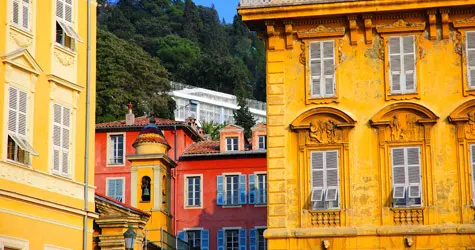
A hunters’ camp 400,000 years ago, a Greek trading post, a Roman capital, a castle razed on Louis XIV’s orders, then winter visitors from the North: the history of Nice can be read in its stones, from the seafront to the heights of Cimiez.
From the beach hunters to the Greeks of Nikaia
It all begins east of the port, on Boulevard Carnot, around 400,000 years ago. At Terra Amata, elephant hunters establish their camp and tend fires: the site ranks among the earliest evidence of the mastery of fire. Much later, merchants from Marseille settle on the rock overlooking the bay, the future hill of the Castle. They name their trading post Nikaia, from the Greek nikê, victory. The Tourist Office dates this founding to the 3rd century BC; historians waver between the 3rd and the 2nd century, in the absence of an ancient text or an excavation to settle the question. The name, however, would never leave the city.
The Romans prefer high ground and the interior. At Cimiez, they build Cemenelum, capital of the province of the Alpes-Maritimes from the 1st to the 4th century: an amphitheatre, streets, a district of thermal baths. Two cities then coexist, one administrative in Cimiez, the other maritime at the foot of the rock, and this duality shapes the geography of Nice for a long time to come. The Cimiez district, today residential and leafy, keeps that memory, between gardens and ruins.
On site: from Terra Amata to Cimiez: Cimiez Archaeology Museum (160 avenue des Arènes de Cimiez), with thermal baths and amphitheatre: closed on Tuesdays, open from 10 am to 6 pm from May to October, from 10 am to 5 pm the rest of the year. The Terra Amata museum (25 Boulevard Carnot, closed on Tuesdays) is due to reopen in autumn 2026 after accessibility works.
From the Count of Savoy to the siege of 1543
As early as the 11th century, a castle and a cathedral crown the hill, and the city bristles with ramparts. Nice, for a time an independent republic, falls under the rule of the counts of Provence. In September 1388, in the midst of the succession dispute over Provence, it gives itself to Count Amadeus VII of Savoy: this is the Dedition of Nice. For the Savoys, it is the window onto the Mediterranean they had been waiting for; for Nice, more than four centuries of belonging to an Alpine house, with Villefranche as a military port. The city becomes the maritime fortress of a mountain state, and the hill is covered with defensive works.
In August 1543, Barbarossa’s Ottoman fleet, allied with the French king Francis I, comes to take the city together with the army of the Count of Enghien. The lower city falls, but the castle holds firm. Legend has it that a washerwoman, Catherine Ségurane, put a Turkish standard-bearer to flight with blows of her bat; historians rank her among the figures of tradition, which does not stop the Niçois from having dedicated a stele to her. The attackers withdraw in early September, as imperial and ducal troops approach. The Sincaire bastion, the most heavily bombarded, stood where Place Garibaldi spreads today.
1706: the hill razed
Louis XIV takes Nice twice. As early as 1691, Catinat seizes the city and a cannonball blows up the keep’s powder magazine. In 1705, La Feuillade returns: the city capitulates in the spring, the citadel holds out until 4 January 1706. The king then orders the castle razed, and the sappers work for about six months from July 1706. The hill then serves as a quarry. All that remains are scattered blocks and a stretch of wall marked by a cannonball impact. The Treaty of Utrecht returns Nice to Savoy in 1713, but nothing is rebuilt: the hill becomes a cemetery, then a garden.
On site: the hill of the Castle: Free entry, from 8:30 am to 8 pm from April to October, until 6 pm from November to March. Look for the blocks of the old castle, the cannonball wall and the waterfall. Then make your way down into baroque Old Nice: the Sainte-Réparate Cathedral, on Place Rossetti, crowns its roofs with a dome of glazed tiles.
French, Sardinian, then French for good
The Revolution puts an end to the Savoyard interlude. On 29 September 1792, General d’Anselme enters Nice without a fight. In February 1793, the county becomes the department of the Alpes-Maritimes. With the Empire fallen, the city returns in 1814 to the Kingdom of Piedmont-Sardinia. On 24 March 1860, the Treaty of Turin cedes it to France in exchange for Napoleon III’s support for Italian unification; a plebiscite approves the annexation on 15 and 16 April, a ballot boycotted by supporters of Italy at Garibaldi’s call, and French troops enter the city on 14 June.
The invention of the Riviera
From the mid-18th century, aristocratic families, above all British, come to Nice in search of mild winters. In 1822, after poor harvests, the Anglican pastor Lewis Way launches a subscription among the winter residents to put unemployed Niçois to work. They level a path two metres wide along the sea, opened in 1824: the Niçois call it the camin dei Inglés, the path of the English, ancestor of the Promenade. The Russians follow, with Empress Alexandra Feodorovna as early as the winter of 1856-1857. The railway arrives in 1864: wintering becomes an art of living, then an industry.
During the Belle Époque, Nice takes on its stature as a winter capital. The Opera, rebuilt to the plans of François Aune after the March 1881 fire that had killed 63 people, is inaugurated on 7 February 1885. The Saint-Nicholas Orthodox Cathedral, begun in 1903, unfurls its five domes in 1912. The Negresco, designed by Édouard-Jean Niermans, welcomes its first guests in January 1913, on the eve of the war. The foreign colony sets the tone, hotels climb as far as the hills of Cimiez, and the Promenade becomes the stage on which one is seen.
On site: the Belle Époque: Saint-Nicholas Cathedral: guided tour of about 35 minutes for €10, free for under-12s, smart dress required. Continue with the Opera, on rue Saint-François-de-Paule, then the Negresco, on the Promenade, whose royal salon is protected as a historic monument.
The twentieth century, ordeal and recognition
After winter, summer gradually takes over. The Second World War leaves darker traces. Nice passes under Italian occupation in November 1942, then German after the Italian armistice of September 1943. Under the authority of Alois Brunner, the Excelsior hotel, near the station, serves as a sorting centre for the round-ups of Jews, deported via Drancy. On 28 August 1944, the Nice Resistance rises up and the Germans abandon the city; American troops enter two days later.
Since 1975, Nice has hovered between 340,000 and 360,000 inhabitants. On 14 July 2016, an attack on the Promenade des Anglais killed 86 people; the Promenade now also bears that memory. On 27 July 2021, meeting in Fuzhou, China, the UNESCO World Heritage Committee inscribes “Nice, the winter resort town of the Riviera”: 522 hectares from the seafront to the hills of Cimiez, surrounded by a buffer zone of 4,243 hectares, shaped, according to the Tourist Office, from the mid-18th to the mid-20th century by cosmopolitan wintering.
- 400,000 years ago: Hunters camp at Terra Amata and tend hearths: one of the earliest traces of the mastery of fire.
- 3rd century BC: Greeks from Marseille found the trading post of Nikaia on the hill of the Castle, according to the Tourist Office.
- 1st-4th c.: Cemenelum, on the hill of Cimiez, is the capital of the Roman province of the Alpes-Maritimes.
- 1388: Nice gives itself to Amadeus VII, Count of Savoy: this is the Dedition, which gives Savoy access to the sea.
- 1543: Franco-Ottoman siege: the lower city falls, the castle holds out. The legend of Catherine Ségurane is born of this siege.
- 1706: On Louis XIV’s orders, the castle and its ramparts are demolished; the hill becomes a quarry, then a cemetery and a garden.
- 1713: The Treaty of Utrecht returns Nice to the House of Savoy.
- 1792: On 29 September, General d’Anselme’s army enters without a fight; the county becomes a French department in 1793.
- 1814: Nice returns to the Kingdom of Piedmont-Sardinia.
- 1824: Inauguration of the Promenade des Anglais, financed by British winter residents at the initiative of pastor Lewis Way.
- 1860: Treaty of Turin (24 March), plebiscite (15-16 April), entry of French troops (14 June): Nice becomes French.
- 1864: The railway reaches Nice; the winter resort takes off.
- 1885: Inauguration of the Opera, rebuilt after the 1881 fire.
- 1912-1913: Inauguration of the Russian Saint-Nicholas Cathedral (1912), then opening of the Negresco hotel in January 1913.
- 1944: On 28 August, the Resistance rises and the German troops depart.
- 2021: On 27 July, UNESCO inscribes Nice, winter resort town of the Riviera, as World Heritage.
Wikipedia – Nice · Wikipedia – Métropole Nice Côte d’Azur · Wikipedia – Nice (climate) · Nice Côte d’Azur Tourist Office – UNESCO inscription · Wikipedia – County of Nice · Wikipedia – Niçois · Wikipedia – Niçard dialect · Wikipedia – Musée Matisse (Nice)
Read also
Find this subject and much more in our complete travel guide Nice in Depth.