Niçois culture, language and way of life: landmarks and glossary
Nissart, savoir-vivre, football, artists linked to Nice and a small Niçois-French glossary to better understand the city.
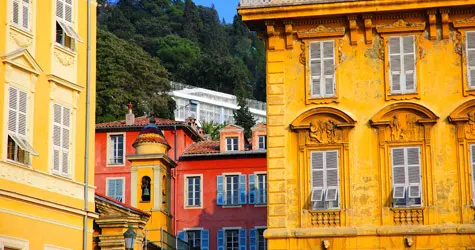
Savoyard for centuries, French since 1860, Nice cultivates an identity all its own: a language, an eagle, a laundress turned heroine, a football club and artists who chose it. Enough to understand what you hear, and to conduct yourself properly.
Nissa, an identity all its own
Nice entered the orbit of the House of Savoy in 1388, through a deed of dedication sealed at the abbey of Saint-Pons. The county adopted Italian as the language of official documents in 1561, came under French control in 1793, became Sardinian again in 1814, then united with France in 1860, after the Treaty of Turin and a plebiscite. By that date the population was largely bilingual and French was spoken chiefly by the urban elites; compulsory schooling, from the 1880s onwards, would cause the local language to decline.
Niçard, or nissart, ranks among the varieties of Occitan, in the Provençal group, with Ligurian influences. Few people from Nice still speak it fluently, but it survives thanks to the school system (a baccalauréat option, the Calandreta school) and the bilingual plaques of Old Nice. The city writes its name Nissa or Niça there, and the final a is pronounced, whereas elsewhere in Occitanie it is pronounced o.
Arles in France, Aix in Provence, Nice in barbarity. Provençal saying
The city's emblem is a red, crowned eagle with lowered wings, perched on three mounds, on a white background: it is what flies on the Niçard flag, beneath the motto Nicaea fidelissima, “Nice the most faithful”. The red and white recall the white cross of Savoy on a red background; the eagle, an imperial emblem, refers to the old county's status as a fief of the Holy Roman Empire. The Aiglons of OGC Nice owe their nickname to it.
Catherine Ségurane, the laundress of the 1543 siege
Every person from Nice knows Catherine Ségurane, a laundress turned heroine of the siege of 1543, when the Franco-Ottoman fleet attacked the city: she is said to have torn an enemy banner away by striking the soldier with her washboard. The chroniclers of the time do not mention her and historians debate whether she existed, but the symbol has stuck. A bas-relief on rue Sincaïre, unveiled on 25 November 1923, pays tribute to her; Saint Catherine's Day, on 25 November, celebrates her; a stand at the Allianz Riviera bears her name.
At the table, the language is read on the menus
Niçard can be read first on restaurant menus. Pan bagnat comes from pan banhat, “wet bread”; the pissaladière takes its name from pissalat, from peis salat, “salted fish”; socca is sold piping hot in Old Nice; the tourta de blea is the Swiss chard pie. These words tell of a land where the olive, the anchovy and the Swiss chard hold sway. The chapter on cuisine puts them on the table.
Le Gym, the Aiglons and the Allianz Riviera
OGC Nice, founded on 9 July 1904 as a multi-sport club, plays in red and black and is called le Gym or les Aiglons. It has four French championship titles (1951, 1952, 1956, 1959) and has belonged to the Ineos group since August 2019. Its stadium, the Allianz Riviera, opened on 22 September 2013 with a 4-0 victory over Valenciennes, seats around 35,600 and hosted four matches at Euro 2016; its stands are named Garibaldi, Ségurane, Ray and Populaire Sud.
To get to the match, take the tram: line 3 runs from Port Lympia to the stadium, which has its own stop, “Stade”, with a tram roughly every ten minutes before the match and every four to five minutes after. The ticket costs the usual fare of €1.70. Tickets are bought on the club's official ticketing site.
The artists who chose Nice
Henri Matisse arrived in Nice in 1917 and lived there until his death in 1954. The Matisse Museum, created in 1963 in the villa des Arènes in Cimiez, holds the largest public collection of the artist's work. The painter lies a few minutes' walk away, in the cemetery of the Cimiez monastery. The museum is closed on Tuesdays.
The national Marc Chagall museum opened in 1973, during the artist's lifetime, after he had given the State seventeen large canvases of the Biblical Message in 1966. The building by architect André Hermant houses these canvases, a mosaic and stained-glass windows created by Chagall for the site, as well as the preparatory sketches given in 1972. It is closed on Tuesdays.
Yves Klein was born in Nice on 28 April 1928 to painter parents, befriended Arman and Claude Pascal there, and registered the formula for International Klein Blue in May 1960. With Arman, Ben and Martial Raysse, he is associated with the École de Nice. The MAMAC, on place Yves Klein, devotes a permanent room to him, but it has been closed for renovation since January 2024, with reopening announced for 2028.
Niki de Saint Phalle, who joined Nouveau Réalisme in 1961, made a donation to the MAMAC in 2001, home to one of the largest European collections of her work. While the museum is closed, the exhibition “Niki de Saint Phalle. Vive l'Amour #6” is shown off-site, at the Cité mixte du Parc Impérial, from 24 September to 11 December 2026.
Nice-style good manners
- Hello first: greet people when entering a shop or café, and thank them when leaving.
- At the table, lunch is generally served from noon to 1.30 pm, dinner from 8 pm to 10 pm. In between, look for the sign “service continu”.
- Service is included in the listed prices (the wording “prix service compris”): tipping is optional.
- On the beach, smoking is banned on all public beaches in Nice, labelled “plage sans tabac” since summer 2024; dogs are only allowed at Lenval and La Lanterne.
- In places of worship, the Russian Orthodox Saint Nicholas cathedral requires proper dress and refuses bare-chested visitors. Shoulders and knees covered: the simplest rule in all churches.
- On public transport, validate your ticket for each tram or bus journey.
Mini-glossary
Niçard words are written as they appear on menus and signs. Pronunciation is given in French, with the stressed syllable in capitals, based on the phonetic transcriptions of dictionaries; Occitan words that have passed into French keep their French pronunciation. The last seven lines gather French words you will come across every day.
| Word | Pronunciation | Meaning, use |
|---|---|---|
| Nissa | NI-ssa (the a is pronounced) | Nice, in Niçard. |
| Nissart | ni-SAR(t) | A resident of Nice, and the name of the language. |
| Adieu | a-DIOU | Familiar greeting of the South, on arrival as well as departure. |
| Socca | so-KA | Thin chickpea-flour crêpe, eaten hot. |
| Pissaladière | pi-sa-la-DYÈR | Tart with bread dough, onions, olives, anchovies. |
| Pissalat | pi-sa-LA | Condiment of small sardines and anchovies; “salted fish”. |
| Pan bagnat | pan ba-GNA | From pan banhat, “wet bread”; bread soaked in olive oil. |
| Panisse | pa-NISS | Southern speciality made from chickpeas. |
| Pistou | pis-TOU | Basil ground with olive oil; also the soup. |
| Tapenade | ta-pe-NADE | Olives, capers, anchovies; from tapena, “caper”. |
| Fougasse | fou-GASSE | Flat Provençal bread, often cut into branches. |
| Mesclun | mès-KLEUN | Mix of young lettuces; from mesclum, “mixture”. |
| Gabian | ga-BYAN | Occitan name of the yellow-legged gull. |
| Galet | ga-LÈ | Stone smoothed by water: the beach of Nice. |
| Cours | COUR | Tree-lined public promenade: the cours Saleya. |
| Corso | kor-SO | Street parade during an outdoor festival. |
| Addition | a-di-SYON | The bill at a restaurant. |
| Apéro | a-pé-RO | Aperitif, in everyday speech. |
| Service compris | ser-VISS kon-PRI | Menu wording: service is included. |
| Bonjour | bon-JOUR | The word that opens every exchange with a shopkeeper. |
Wikipedia – County of Nice · Wikipedia – Niçard · Wikipedia – Niçard dialect · Musée Matisse de Nice – official website · Wikipedia – Musée Matisse (Nice) · Fête de la musique – French Ministry of Culture official website · European Heritage Days – French Ministry of Culture official website · Nice Côte d'Azur Tourist Office – Land of events
Read also
Find this topic and much more in our complete travel guide Nice in Depth.