Electrical plugs in France: type E, 230 V and adapters
Which plug and voltage in France? Types C and E, 230 V, adapters for the UK, US or Asia, roaming and eSIM in Nice.
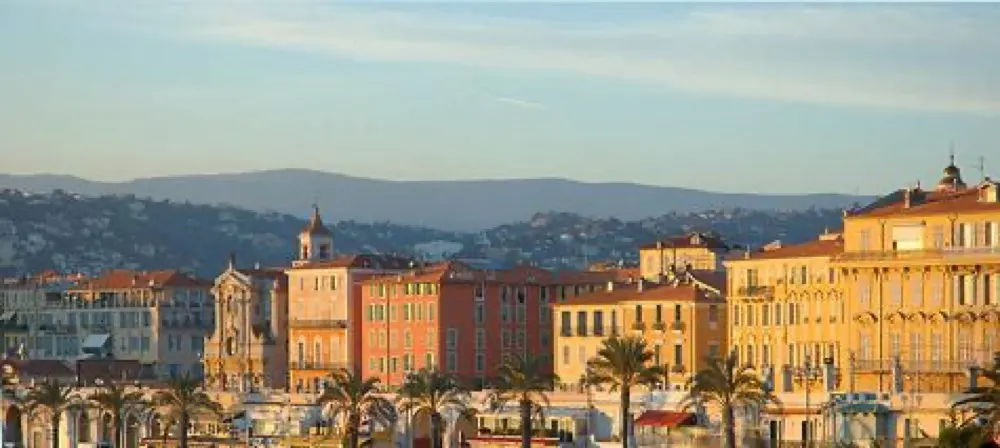
Plugging in, calling, sending a postcard: a few pointers so technicalities don't spoil your stay, starting with the shape of the socket.
Sockets and voltage
France uses type C and type E sockets, at 230 V and 50 Hz. Type E, with its earth pin fixed in the socket, also accepts the round two-pin plugs of type C, which equip most European chargers. British plugs (type G, 230 V, 50 Hz) only need an adapter: their devices handle the voltage. For the United States and Canada (types A and B, 120 V, 60 Hz), you need an adapter and must check the voltage. Phone and laptop chargers almost always accept 100 to 240 V, as the label indicates. A hairdryer or straightener designed for 120 V only would not survive a French socket.
Australia and New Zealand (type I, 230 V) have the right voltage and the wrong socket; Japan (types A and B, 100 V) and China (types A and I, 220 V) also require an adapter. India, South Korea and Morocco use type C sockets, which France accepts. In every case, read the rating plate before plugging in a straightener or kettle.
| Voltage and frequency | 230 V, 50 Hz |
|---|---|
| Sockets | Types C and E |
| Calling France from abroad | +33, without the initial 0 |
| 110–120 V devices | Adapter; voltage on the label |
| Free Wi-Fi in town | Spot Wifi Nice network, one-hour sessions renewable |
| Free Wi-Fi at the airport | NiceAirportFreeWifi, no time limit |
Tip: Pack a European power strip with round plugs: a single adapter then powers phone, camera, power bank and e-reader, and you leave the hairdryer at the hotel.
Calling and staying connected
If your plan comes from a European Union country, it works in France on your home terms: this is the "roam like at home" principle, which also covers Iceland, Liechtenstein, Norway, Ukraine and Moldova. Operators may nevertheless cap data under fair use policies and warn you when you approach the limit. The United Kingdom has been excluded from this regime since Brexit. From the UK, ask your operator what it charges in France. Outside the Union, a travel eSIM installed before departure or a prepaid visitor SIM bought from a French operator avoids nasty surprises.
Public Wi-Fi is plentiful in the centre. The municipal Spot Wifi Nice network covers in particular the cours Saleya, the Palais de Justice, place Garibaldi, the promenade du Paillon, place Masséna, the quai des États-Unis and the Tourist Office forecourt on the promenade des Anglais; you select it in settings, then simply follow the welcome page in your browser. At the airport, the NiceAirportFreeWifi network is free and unlimited after entering an email address. On an open network, avoid banking operations: switch to mobile data instead.
La Poste and parcels
A letter or postcard of 20 g to foreign destinations, including Europe, costs €2.25 with a stamp bought at the counter or machine, €2.19 with a stamp printed online; La Poste announces two to three days to the European Union. For a parcel, Colissimo Europe, to the EU and Switzerland, costs €14.99 for 500 g, €19.39 for 1 kg and €28.59 for 5 kg, with three to eight days' delivery time depending on destination.
L'Info Durable – Heatwave: Ironman Nice cancelled by prefect's decision · CCI Paris Île-de-France – Restaurant display obligations · Riviera Radio, Inauguration of the Terminal 2 extension · Uber, Pick-up at Nice Terminal 2 · City of Nice, Getting around · Cleanrider, Nice: Pony and Lime replace Vélobleu · La Banque Postale, DCC, understanding dynamic currency conversion · European Commission, Entry/Exit System
See also
Find this topic and much more in our complete travel guide Nice in depth.